Professional family as a means of socializing children and young adults from children's homes
Introduction
In 1950 Winniccott said that there is no phenomenon of „the child", there can only exist the phenomenon of „mother and child". By the term „mother" we do not understand only a woman – a mother. Psychologists speak of a so-called close person who takes care of the child, where the sex, age or kinship relationship is not essential. Or, put differently, the child considers as a parent the one who genuinely takes care of it. The process of the child's socialisation in the first years of life is determined by the persons and the environment in which it lives and which provides it with patterns of behaviour.
In the first year of a child's life an important psychosocial crisis of building basic trust or mistrust emerges. The period of attachment. The environment in which the child grows up either provides it with sufficient trust and stability, or it does not. The child is thereby endangered in a children's home (DeD), but also in a disintegrating family, or when it finds itself in the situation of an unwanted child. The most severe forms of psychological deprivation stem already from this period. (Škoviera, 2006).
It was precisely the negative impacts of psychological deprivation in children living long-term in DeD of the residential type that were the impulse for the transformation of children's homes in Slovakia and for their gradual transformation into DeD of the family type with a preference for professional families. In an effort to minimise children's stay in DeD and to place them in other forms of family care, with the main idea: „That every child should have its family..." the civic association Úsmev ako dar, in the year 2000, in cooperation with the Ministry of Labour, Social Affairs and Family, began to carry out the transformation of children's homes. As this is a long-term and complex process, in practice every effort also encounters many obstacles. In children's homes in Slovakia there are currently 4,589 children growing up, of whom more than a thousand precisely in a professional family (1,140, Central Office of Labour, Social Affairs and Family, data as of 31 November 2011). The issue of the social integration of children and young adults from children's homes is therefore still highly topical.
The process of the child's socialisation and the disruption of this process
Kraus (2008) defines socialisation as the process of the gradual transformation of a human being as a biological being into a social being, that is, the gradual integration into the life of a given society, a process in which we learn to live in a given society. Socialisation takes place throughout life randomly, spontaneously. In the course of life a person acquires specifically human forms of behaviour, language, knowledge and norms, that is, the culture of a given society. According to Vágnerová (2004), the need to belong to some community, to be accepted by it and positively evaluated, is an important psychological need and the basis of a person's group identity. In the course of a child's life, the first and most important condition in primary socialisation is a trusting bond – a connection to people who already have their approach to the world formed. This connection is almost exclusively responsible for the state of sensory development and a good emotional state. This relationship is formed most easily between a child and the mother, that is, the person with whom it is already emotionally most closely connected during pregnancy. In her and beside her it can, with its elementary vital needs for warmth, nutrition, support and care, feel most naturally. It is thus a matter of the need for a close person, which is essential for satisfying basic needs. The bond to other people depends to the same extent on how they contribute to the good state (health) of the child (Lewinski, 2006). From the point of view of personality development, the most important for the child is primary socialisation, which takes place in the family, or in the environment that replaces it. Secondary socialisation is the process of learning and adaptation of individuals throughout the whole of life. It takes place in educational, schooling, or other institutions and environments into which the child comes (Matoušek, 2003).
The disharmony of an individual's needs, values and norms with the environment corresponds to social maladaptation (maladjustment, dysadaptation), i.e. a disrupted, inadequate or insufficient adaptation of an individual or a small social group. A form of social maladaptation is dissocial behaviour, which is typical for its varied symptomatology and multifactorial background. Other kinds of maladaptation can also exist, e.g. in the broader sense neuroses, personality disorders, psychoses. As Labáth et al. (2001) state, in the event that a spontaneous correction of the dissocial symptoms does not occur, or effective intervention is not provided, it is very probable that the dissocial manifestations will gain in intensity, will be more pathological and directed against the social environment.
From the foregoing it follows that the basis of a person's successful socialisation is primary socialisation (in the family, or an environment replacing the family). Here the child learns models of behaviour and relationships towards other people, towards education, towards work, towards problem-solving, towards itself. A non-negligible place here is held by the example of the parents and the style of upbringing. The fact that a child from DeD lacks these natural examples, as well as the models of the functioning of an ordinary family, causes in many cases problems also in its secondary socialisation, which takes place in educational, schooling, or other institutions and environments into which the child comes. Further problems in this group also arise in social integration after the end of institutional care. Slowík (2008) characterises social integration as the process of the equal inclusion of a person into society – that is, something entirely natural that concerns every member of society. However, complications arise in the specific cases of certain persons or minority groups (ethnic minorities, persons with disabilities, young adults from DeD, etc.), who differ markedly from the majority population and are not able to achieve a high degree of socialisation in a natural way. In these cases it is necessary to actively support their integration and create suitable conditions for them.
The most common socio-pathological phenomena in children and young adults from children's homes
The aetiology of the emergence of behavioural disorders is broad. There are internal and external factors that influence the emergence of these disorders. Gaľová (2011) characterises behavioural disorders as a more persistent, broad, aetiologically diverse spectrum of maladaptive behaviour, when the individual is resistant to ordinary educational influence. Children and young adults in DeD are a risk group. Riskiness in this group means a greater susceptibility, a higher endangerment of psychosocial development compared with the standard population (Labáth, 2001). As decisive risk factors one can consider above all frustration, conflict, deprivation, fear and stress, which are frequent accompanying phenomena in pathological families, but also in the removal of a child from biological families and in the child's adaptation to a new environment and people in DeD. The emergence of psychosocial disturbance, as is evident already from its name, is given by the interplay of psychological factors (deprivation in a dysfunctional family or in the conditions of DeD) and social factors (insufficient upbringing, neglect in the family, the manner of upbringing in DeD, etc.). One can agree with the view of Škoviera (2006) that a functioning family has, in the first stages of the child's psychosocial development, far greater possibilities to create an environment in which the child is able to adequately resolve its psychosocial crises. Among the most common socio-pathological phenomena that we encounter in the environment of children's homes are bullying and various behavioural disorders (asocial behaviour, disobedience, dissocial behaviour). Children also have various psychological problems such as, for example, anxiety disorders, hyperactivity and impulsivity, childhood depression (Oláh, 2005). Further typical symptoms of children with behavioural disorders are also truancy, educational problems, criminal activity, drug experience, aggressive manifestations, hyperactivity with attention deficit, wandering, premature sexual activities (Škoviera, 2007).
Through research into the social integration of young adults from children's homes (Kollárová, Hučík, 2011), the most common behavioural disorders occurring in children in DeD were identified (Fig. 1) as well as the most common socio-pathological phenomena endangering young adults after leaving DeD (Fig. 2):
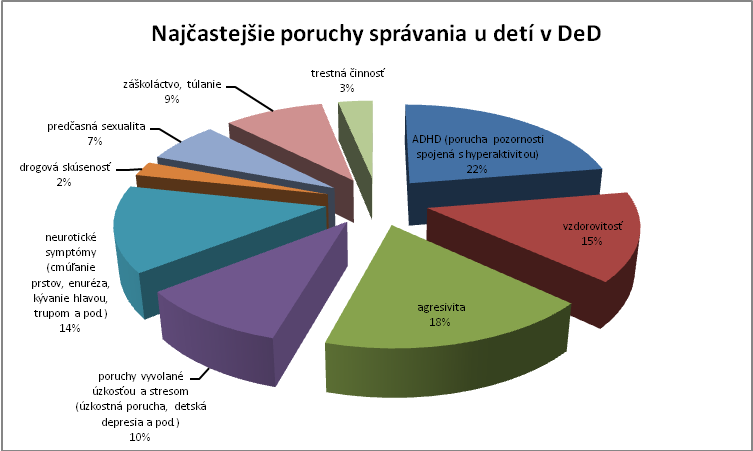 Fig. 1: The most common behavioural disorders in children in a children's home (Source: Kollárová, Hučík, 2010)
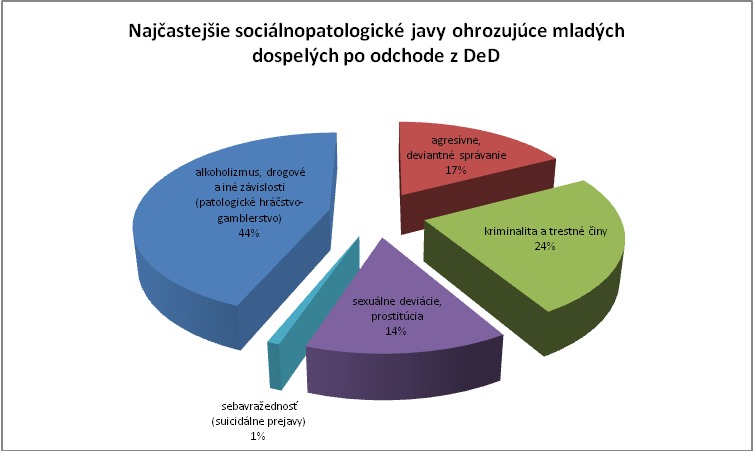 Fig. 2: The most common socio-pathological phenomena endangering young adults after leaving DeD (Source: Kollárová, Hučík, 2010)
All these disorders must be caught at an early stage and given increased attention. The current situation in the area of socio-pathological phenomena in children and youth draws our attention to the need for effective prevention. To carry out this process is very demanding and includes the whole process of implementing the measures of many institutions whose task is to reduce the occurrence and spread of socio-pathological phenomena. To achieve success in the re-educational process in children and young adults with disorders of psychosocial and emotional development is very demanding and conditioned by many factors. The individual models of re-educational programmes underline either the action on the „internal" factors that led to the delinquent development, or the importance of the quality of the social environment and educational influence, or the two approaches are combined to varying degrees. Despite the effort of theorists as well as practitioners to find and verify the most effective possible model of mutually interconnected and systematically consecutive methods and procedures, based on the scientific knowledge of psychology, pedagogy, special and therapeutic pedagogy, psychiatry and other scientific disciplines, the human factor nevertheless proves to be the most important. In this respect one can highlight the professional family, which provides children and young adults with behavioural disorders an alternative for mitigating and overcoming these disorders in a family, not an institutional, environment. In the case of serious behavioural disorders, as stated in the Concept of Securing the Execution of Court Decisions in Children's Homes for the Years 2012–2015 with an Outlook to 2020, the Plan of Transformation and Deinstitutionalisation of Substitute Care (ÚPSVaR, 2011), the individual integration approach is not a suitable, effective means. The child endangers not only the running of the independent group in DeD, but also itself and possibly others in its surroundings. Then it is appropriate to consider placement in a specialised group for children with behavioural disorders with regime elements.
Fig. 2: The most common socio-pathological phenomena endangering young adults after leaving DeD (Source: Kollárová, Hučík, 2010)
All these disorders must be caught at an early stage and given increased attention. The current situation in the area of socio-pathological phenomena in children and youth draws our attention to the need for effective prevention. To carry out this process is very demanding and includes the whole process of implementing the measures of many institutions whose task is to reduce the occurrence and spread of socio-pathological phenomena. To achieve success in the re-educational process in children and young adults with disorders of psychosocial and emotional development is very demanding and conditioned by many factors. The individual models of re-educational programmes underline either the action on the „internal" factors that led to the delinquent development, or the importance of the quality of the social environment and educational influence, or the two approaches are combined to varying degrees. Despite the effort of theorists as well as practitioners to find and verify the most effective possible model of mutually interconnected and systematically consecutive methods and procedures, based on the scientific knowledge of psychology, pedagogy, special and therapeutic pedagogy, psychiatry and other scientific disciplines, the human factor nevertheless proves to be the most important. In this respect one can highlight the professional family, which provides children and young adults with behavioural disorders an alternative for mitigating and overcoming these disorders in a family, not an institutional, environment. In the case of serious behavioural disorders, as stated in the Concept of Securing the Execution of Court Decisions in Children's Homes for the Years 2012–2015 with an Outlook to 2020, the Plan of Transformation and Deinstitutionalisation of Substitute Care (ÚPSVaR, 2011), the individual integration approach is not a suitable, effective means. The child endangers not only the running of the independent group in DeD, but also itself and possibly others in its surroundings. Then it is appropriate to consider placement in a specialised group for children with behavioural disorders with regime elements.
The importance and problems of professional families in the socialisation of children and young adults from children's homes
In the case of the professional family, one must above all highlight the importance of the professional family for the child. This form of substitute care takes into account the fulfilment of the child's individual needs and most closely approaches the model of family upbringing. A child in a professional family has the opportunity to grow up in a family environment, which, from the point of view of its development, is very important for building relationships and bonds. The professional parent gives the child the constancy of the person who takes care of it. A child in a professional family grows up in an environment with sufficient stimuli for its development and acquires, in the professional family, patterns of family roles in a natural way. Professional substitute upbringing in a family was for the first time legally enshrined in our country in 1993 in Act No. 279/1993 Coll. on school facilities. Children's homes at that time belonged under the education sector, and its intention was to create such a type of substitute family care in which the advantages of a family environment would be combined with the availability of professional assistance in upbringing (Mikloško, 2008). Professional substitute upbringing in a family was intended for those children who could not be adopted and for whom not even foster families were found. That is, for a group of children disadvantaged by the fact that they were older children, sibling groups, Roma children, children with educational problems, mentally or psychologically disabled children, or for children who, although they were in contact with their parents, could not be brought up by the parents themselves (Oláh, 2005). According to Mikloško (2011), the professional family has enormous importance especially for small children, because they do not grow up in an anonymous institution, but in a family that fulfils their need to have a close person and thus enables children to develop a healthy personality structure and, in the future, to be a good parent. In a professional family, care for the children is provided by an individual or a married couple who are employees of the children's home, or by a natural person who is an employee of the children's home in their own family environment. A married couple may provide care in a professional family that is established in a separate house or flat which is a delimited part of the children's home only if both are employees of the children's home. The children's home is obliged to create such conditions in the children's home that every child up to the age of three that is admitted to the children's home is, as soon as possible after diagnosis, placed in a professional family. The children's home maintains contact with the young adult, with their consent, even after their departure from the children's home, and provides them with the necessary counselling in becoming independent. From January 2013, every child up to 6 years of age must be placed in a professional family. The Central Office of Labour wants to gradually raise this limit and enable the largest possible number of children to grow up in a family environment. The Office is also launching a project for better preparedness and support of professional parents. Professional families are gradually replacing institutional care, and in recent years an increase in professional parenthood in Slovakia is evident (Tab. 1).
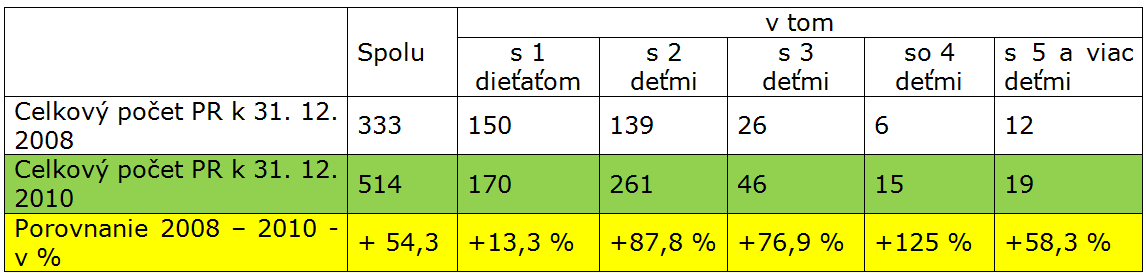 Tab. No. 1 – The number of professional families (PR) (Source: ÚPSVaR, 2011)
In accordance with the Concept, the Office set itself the goal, through the gradual increase in the number of professional families, of ensuring such conditions that at the latest in 2015 every child at least up to 8 years of age, and at the latest in 2020 every child at least up to 10 years of age, would be placed in a professional family. Further measures that the Ministry of Labour, Social Affairs and Family of the Slovak Republic (2011) is preparing in this area concern the strengthening of social work in the field with the aim of helping the child's biological family to resolve difficulties so that the child can return to its parents.
Tab. No. 1 – The number of professional families (PR) (Source: ÚPSVaR, 2011)
In accordance with the Concept, the Office set itself the goal, through the gradual increase in the number of professional families, of ensuring such conditions that at the latest in 2015 every child at least up to 8 years of age, and at the latest in 2020 every child at least up to 10 years of age, would be placed in a professional family. Further measures that the Ministry of Labour, Social Affairs and Family of the Slovak Republic (2011) is preparing in this area concern the strengthening of social work in the field with the aim of helping the child's biological family to resolve difficulties so that the child can return to its parents.
The issue of professional parenthood
The situation in DeD in recent years clearly speaks of an increase in professional parenthood. According to the data of the Central Office of Labour, Social Affairs and Family (ÚPSVaR), the number of professional parents in DeD continuously increased over the years 2008 to 2010. The number of professional parents rose in comparison with 2008 by 181, which represents an increase of 54.3%, and the number of children and young adults placed with them by 388 children and young adults. An increasing number of professional parents was also recorded who are willing and able to provide care for a larger number of children, that is, also for larger sibling groups (Koncepcia...). In connection with professional parenthood, the following problems come to the fore:
- the problem of employing all professional parents,
- the problem with placement of:
- older children (about 5,500 children in the children's home over 10 years of age),
- sibling groups (only 19% in the children's home have no siblings),
- children with serious behavioural disorders (drug- and otherwise addicted),
- children with a health disability,
- Roma children (50–80% in the children's home). (Mikloško, 2008).
- the problem of the social integration of young adults after leaving children's homes (weak support for the becoming-independent of this target group),
- the problem of improving the quality of the preparation of professional parents.
In connection with professional parenthood, ÚPSVaR dealt with several cases of difficulties in the departure of a child from a professional family to a substitute family. These were impulses from professional parents connected with the fact that during the care a strong emotional bond arose between the professional parent and the child, which caused problems for professional parents in handing the child over to a substitute family. The „temporariness" of the care of a child in a professional family came to the fore especially in connection with the placement of children up to 3 years of age, where the entrusting of these children to substitute families or their return to their own family is more frequent. These children remain in professional families for several months, sometimes weeks. Children in professional families change more frequently, which is certainly demanding. In the beginnings of professional parenthood, children were placed in professional families who had a lower chance of being entrusted to a foster or adoptive family (e.g. with a disability). These children remained in professional families longer, often until adulthood. The theme of attachment in the professional family is therefore very topical. (Marcinová, 2009).
CAN syndrome in professional families is a rare, unfortunately not non-existent phenomenon. There are isolated cases where a professional parent fails in their demanding work, does not carry it out in accordance with the principles of the correct upbringing of a child, uses inadequate educational methods, or even has no relationship with the children and carries out the work only because of an inability to find other employment. Unfortunately, the media also draw attention to cases of bullying, abuse or neglect on the part of the professional parent. In such cases, even at the slightest suspicion of abuse or neglect of children, or of other impermissible behaviour of „professional parents", it must be reported immediately to the nearest social department or to the police, and they will immediately address the situation with the professional parent and also with the children's home. In this respect, the need for a more comprehensive and higher-quality preparation of professional parents and a stricter selection of criteria for the performance of this demanding profession comes to the fore. Professional parents become employees 24 hours a day; they are confronted with behavioural disorders or other emotional disorders frequently occurring in children from DeD.
The issue of children with a health disability in professional families
A specific group is formed by children with a health disability, who require a particularly individual, patient approach. According to ÚPSVaR data, compared with 2008 the number of children with a severe health disability (ŤZP) placed in the care of professional parents rose more than twofold. Communication and cooperation with specialists (psychologists, special and therapeutic pedagogues, or other specialists) is essential in this respect. The Office is therefore preparing changes in the status of professional parents, which are to be contained in an amendment to the Labour Code. Further, better financial remuneration is also being considered for the placement of children with a health disability, as well as the selection of candidates for professional parent, and likewise the introduction of psychological tests as part of their selection.
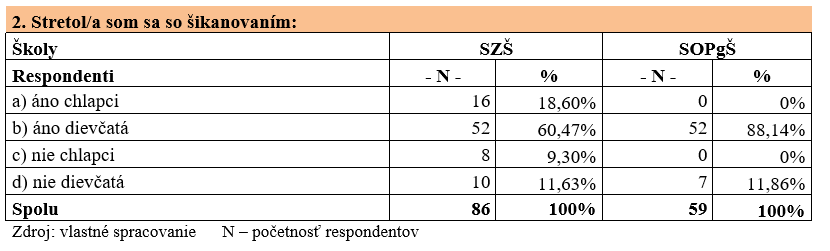 Tab. 2 – The number of children and young adults in professional families (Source: ÚPSVaR, 2011)
The basic starting point for work with this target group is an integration and individual approach. The integration approach is understood on two levels. On the first level it is a matter of creating conditions for the integration of children in local communities (professional families and appropriately arranged and localised groups under conditions at the community level). The second level contains the internal integration approach, i.e. the inclusion of children with less serious developmental disorders that are not a contraindication for integration (serious health and sensory disabilities, mental disorders, behavioural disorders...) into professional families and independent groups in DeD, with the creation of conditions for the intensification of the individual approach and the application of professional methods, forms and programmes of work with children who require a specific approach.
In view of these facts, the Office plans to adopt systemic measures that will ensure the sustainability of the system of care provided and that will at the same time contribute to the increased readiness of professional parents to accept into their families also children who are difficult to place (children with a severe health disability, children with behavioural disorders, children with mental disorders, children from larger sibling groups). It is therefore necessary to create conditions for ensuring high-quality and intensive professional counselling and assistance in relation to professional parents and for their further education, aimed at acquiring knowledge and skills for work with children with behavioural and learning disorders and with children requiring increased care. Children's homes therefore plan to create so-called Centres of Support for Professional Parents, which will be an organisational part of the respective children's home. The centres will provide support to professional parents by means of professional teams (ÚPSVaR, 2013). The tasks of these centres will be in particular:
Tab. 2 – The number of children and young adults in professional families (Source: ÚPSVaR, 2011)
The basic starting point for work with this target group is an integration and individual approach. The integration approach is understood on two levels. On the first level it is a matter of creating conditions for the integration of children in local communities (professional families and appropriately arranged and localised groups under conditions at the community level). The second level contains the internal integration approach, i.e. the inclusion of children with less serious developmental disorders that are not a contraindication for integration (serious health and sensory disabilities, mental disorders, behavioural disorders...) into professional families and independent groups in DeD, with the creation of conditions for the intensification of the individual approach and the application of professional methods, forms and programmes of work with children who require a specific approach.
In view of these facts, the Office plans to adopt systemic measures that will ensure the sustainability of the system of care provided and that will at the same time contribute to the increased readiness of professional parents to accept into their families also children who are difficult to place (children with a severe health disability, children with behavioural disorders, children with mental disorders, children from larger sibling groups). It is therefore necessary to create conditions for ensuring high-quality and intensive professional counselling and assistance in relation to professional parents and for their further education, aimed at acquiring knowledge and skills for work with children with behavioural and learning disorders and with children requiring increased care. Children's homes therefore plan to create so-called Centres of Support for Professional Parents, which will be an organisational part of the respective children's home. The centres will provide support to professional parents by means of professional teams (ÚPSVaR, 2013). The tasks of these centres will be in particular:
- professional assistance in acquainting the child with the professional parent and facilitating the establishment of a relationship between the child and the professional parent,
- professional counselling in the placement of children into professional families,
- communication (at the professional level) with applicants for the positions of professional parents and evaluation of the possibilities of ensuring the required care for children, especially for children with various handicaps and sibling groups,
- searching for professional parents purposefully according to the specific needs of a particular child/children,
- ensuring professional diagnostics and diagnostic activities of children, professional assistance to children in professional families,
- counselling in the care of children,
- counselling and support in resolving procedural and organisational matters,
- assistance to professional parents in maintaining the ties of children with their parents and other family members,
- networking of external professional forms of assistance and other support activities according to the needs of children, ensuring education and supervision,
- by providing respite activities according to the needs of professional parents and the children entrusted to them, by coordinating the activity of professional parents,
- checking the provision of care for children.
The Centres of Support for Professional Parents should work on the basis of professional teams (composed of 1 social worker for about 10 professional parents and 1 psychologist for about 20 professional parents) and other specialists according to the needs of the children and professional parents of a given children's home (psychologist, special pedagogue, therapeutic pedagogue, rehabilitation worker, etc.) so that each professional parent has at their disposal a designated social worker and psychologist, who accompany them throughout the whole „stay" of the child in their household and help to resolve everyday situations (Koncepcia..., 2011).
The issue of the social integration of young adults from children's homes
Another current problem in connection with children in children's homes is their social integration after the end of care in the children's home. In accordance with the law, a young adult, after reaching adulthood, may remain, after the end of institutional care, in an independent group, a specialised independent group or in a professional family, if they request it and if it is suitable and expedient (§ 53 of Act No. 27/2009 Coll.). A professional substitute family may also provide care to a minor mother and her child with ordered institutional upbringing. But what are the real chances of this risk group of integrating socially without problems? In 2010 an all-Slovak research study on the social integration of young adults from DeD was carried out (Kollárová, Hučík, 2011), the main aim of which was to evaluate and analyse how young adults integrate socially after leaving DeD. The research sample was formed by directors (or deputy directors, social workers) of children's homes in Slovakia. The real chances of young adults from DeD of integrating socially after leaving DeD without problems were evaluated as weak by the largest share of the directors and social workers of the surveyed children's homes – 36%. 28% evaluated the chances of young adults of integrating without problems as below-average. Further, 26% as adequate, 9% did not know how to assess the given chances, and only 1% evaluated the chances of young adults of integrating socially after leaving DeD as good. The main reasons for this evaluation follow from the findings, which point to the most common behavioural disorders in children in DeD (Fig. 1), the most common socio-pathological phenomena endangering young adults after leaving DeD (Fig. 2), as well as to the most common reasons for social failure after leaving DeD (Fig. 3).
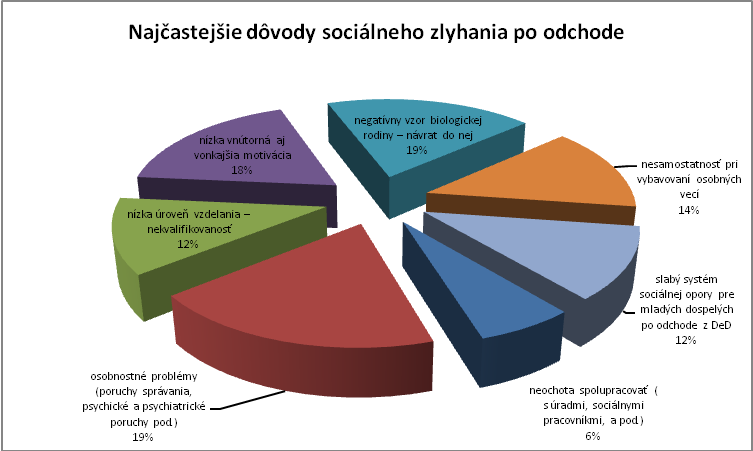 Fig. 3: The most common reasons for the social failure of young adults after leaving DeD (Source: Kollárová, Hučík, 2010)
From the following it is evident that among the most common reasons for social failure is the accumulation of personal problems of young adults from DeD (19%) and objective causes, of which the most common reason was precisely the return to the original – biological – family and its negative example on the young adult (19%). Increased attention must therefore be paid precisely to the rehabilitation (sanation) of the family environment to which many young adults return after leaving DeD. It is precisely here that they are often exposed to secondary endangerment, because dependence, personal problems and the negative influence of the biological family (pathology, alcoholism, unemployment, etc.) can cause the young adult to easily succumb to socio-pathological phenomena, or to end up on the street. As many of the DeD state, biological parents are often not interested in help for the young adult, but in the sum of money that the DeD pays out to the young adult after leaving the DeD. The need for field and community social work gains in importance in this respect. As Mikloško (2011) states, it often happens that a child fails after leaving the children's home. In this case it happens that they have no one to turn to and ask for help. If a young person, after leaving the children's home, finds themselves in a social crisis, they should have the possibility to seek out a social worker who would have the possibility to help and advise them, or to create space for their further social integration, namely through cooperation with the local office of labour, social affairs and family, by providing social, legal and psychological counselling.
Fig. 3: The most common reasons for the social failure of young adults after leaving DeD (Source: Kollárová, Hučík, 2010)
From the following it is evident that among the most common reasons for social failure is the accumulation of personal problems of young adults from DeD (19%) and objective causes, of which the most common reason was precisely the return to the original – biological – family and its negative example on the young adult (19%). Increased attention must therefore be paid precisely to the rehabilitation (sanation) of the family environment to which many young adults return after leaving DeD. It is precisely here that they are often exposed to secondary endangerment, because dependence, personal problems and the negative influence of the biological family (pathology, alcoholism, unemployment, etc.) can cause the young adult to easily succumb to socio-pathological phenomena, or to end up on the street. As many of the DeD state, biological parents are often not interested in help for the young adult, but in the sum of money that the DeD pays out to the young adult after leaving the DeD. The need for field and community social work gains in importance in this respect. As Mikloško (2011) states, it often happens that a child fails after leaving the children's home. In this case it happens that they have no one to turn to and ask for help. If a young person, after leaving the children's home, finds themselves in a social crisis, they should have the possibility to seek out a social worker who would have the possibility to help and advise them, or to create space for their further social integration, namely through cooperation with the local office of labour, social affairs and family, by providing social, legal and psychological counselling.
Conclusion
The most important thing in dealing with emotionally disturbed children and young adults is to address their problems with great respect. After all, the very fact that a child or young person suddenly finds themselves without the support of their own, biological parents (whether it is their death, disinterest, or the child being removed from the family for insufficient care) and is suddenly dependent on the help of strangers is a frustrating moment. There is nothing that could replace one's own family, even if it does not always function as it should. The traumas that many of these children have had to experience and will carry with them for their whole life are, as it were, only a drop in the sea of further problems that emerge in resolving their complicated situation. The issue of children with ordered institutional upbringing is therefore highly topical. Every child that finds itself in such a life situation is individual and requires an individual approach and the best solution for its further personal development. The priority of social work with the family and the child must be the effort to return the child to its original family. In the event that the child cannot return to its original family and cannot grow up even with relatives, the placement of the child in institutional care, that is, in a children's home or in a professional family, should last only as long as necessary, until a substitute family is found for the child or the conditions for the return of the child to a natural family environment are arranged. This original family, however, continues to need intensive professional assistance provided by a social worker. The rehabilitation of the family environment therefore gains in importance, as support for the child through help to its family.
Author: PhDr. Alena Kollárová, PhD.
References
BALOGOVÁ, B. 2008. Neúspešná sanácia dysfunkčnej rodiny a jej dôsledky na vývin dieťaťa v náhradnej starostlivosti. In Mládež a spoločnosť. ISSN 1335-1109, 2008, č. 2, s. 27 - 51.
BECHYŇOVÁ, V. - KONVIČKOVÁ, M. 2008. Sanace rodiny, Sociální práce s dysfunkčními rodinami. 1. vyd. Praha: Portál, 2008. 152 s. ISBN 978-80-7367-392-5.
BERTOVÁ, S. 2008. Práca s výchovným prostredím dieťaťa. In: Sociálna politika a zamestnanosť. ISSN 1336 5053, 2008, č. 7, s. 5 - 6.
BERTOVÁ, S. a kol. 2011. Program prípravy na profesionálne vykonávanie náhradnej starostlivosti. 1. vyd. Bratislava: Ústredie práce, sociálnych vecí a rodiny, 2011. 150 s. ISBN 978-80-969002-5-1.
DUNOVSKÝ, J. 1986. Dítě a poruchy rodiny. 1. vyd. Praha: Avicenum, 1986. 140 s. ISBN 08-040-86.
GAĽOVÁ, K. 2012. Skúsenosti so sociálnej práce s deťmi s poruchami správania a ich rodinami. In: Mosty k rodine. 2 - 3/2012/ročník 3. ISSN I338-2713. [online] [cit. 2013. 1. 1]. Dostupné na internete: http://www.mostykrodine.sk/mosty22012down.pdf
HEJDIŠ, M. a kol. 2011. Profesionálna rodina. 1. vyd. Trenčín: SpoSoIntE, 2011.144s. ISBN 978-80-89533-03-9.
KOLLÁROVÁ, A., HUČÍK, J. 2011. Sociálna integrácia mladých dospelých z detských domovov. 1. vyd. Liptovský Ján: PROHU s. r. o., 2011. 90 s. ISBN 978-80-89535-02-6.
KONČEKOVÁ, Ľ. 2005. Patopsychológia. 2. vyd. Prešov: Lana, 2005. 224 s. ISBN 80-89235-00-X.
MARCINOVÁ, 2009. In: Asociácia náhradných rodín - občianske združenie. [online] [cit. 2013. 1. 1]. Dostupné na internete: http://www.anr.sk/?p=199
MATOUŠEK, O. 2003. Slovník sociální práce. Praha: Portál, 2003. 288 s. ISBN 80-7178-549-0.
MATOUŠEK, O., KROFTOVÁ, A. 2003. Mládež a delikvence. 2. vyd. Praha: Portál, 2003. 335 s. ISBN 80-7178-226-2.
MIKLOŠKO, J. 2011. Náhradná starostlivosť. 2. vyd. Bratislava: Vysoká škola zdravotníctva a sociálnej práce sv. Alžbety, 2011. 94 s. ISBN 978-80-89271-36-8.
MINISTERSTVO PRÁCE SOCIÁLNYCH VECÍ A RODINY SR, 2011 [online] [cit. 2011. 10. 11]. Dostupné na internete: http://www.employment.gov.sk/index.php?SMC=1&mod=news&nid=627&lg=sk
MINISTERSTVO ŠKOLSTVA SR, 2000: Koncepcia o výchove vzdelávaní detí so zdravotným postihnutím [online] [cit. 2011. 10. 11]. Dostupné na internete: http://www.minedu.sk/data/att/937.pdf
OLÁH, M. 2005. Sociálnoprávna ochrana detí. Prešov: PU, Pravoslávna bohoslovecká fakulta, 2005. 206 s. ISBN 80-8068-349-2.
ŘÍČAN, P. 1998. S Romy žít budeme – jde o to jak. Praha: Portál, 1998. ISBN 80-7178-250-5.
SLOWÍK, J. 2008. Speciální pedagogika. Praha : Grada Publishing a. s., 2008. 160 s. ISBN 978-80-247-1733-3.
ŠÍPOŠOVÁ, M. 2008. Detský domov nie je ozajstný domov. In Vychovávateľ, 2008, č. 8, s. 30 – 31.
ŠKOVIERA, A. 2007. Dilemata náhradní výchovy. Praha: Portál, 2007. 144 s. ISBN 978-80-7367-318-5.
ŠKOVIERA, A. 2007. Trendy náhradnej výchovy. Bratislava: Petrus, 2007. 174 s. ISBN 978-80-89233-32-8.
ŠTATISTICKÝ ÚRAD SR, 2013. Zariadenia sociálnych služieb, 2011, 157 s. [online] [cit. 2013. 1. 1]. Dostupné na internete:http://www.employment.gov.sk/index.php?SMC=1&mod=news&nid=627&lg=sk.
TRUHLÁŘOVÁ, Z., SMUTEK, M., 2006. Riziková mládež v současné společnosti. Hradec Králové: Gaudeamus, 2006. ISBN 80-7041-044-2.
ÚSTREDIE PRÁCE, SOCIÁLNYCH VECÍ A RODINY, 2011: Koncepcia zabezpečovania výkonu súdnych rozhodnutí v detských domovoch na roky 2012 – 2015 s výhľadom do roku 2020 Plán transformácie a deinštitucionalizácie náhradnej starostlivosti, 2011, 38 s. . [online] [cit. 2013. 1. 2.]. Dostupné na internete: www.upsvar.sk/buxus/docs/SSVaR/OVOZ/Koncepcia.rtf
ÚSTREDIE PRÁCE, SOCIÁLNYCH VECÍ A RODINY, 2011: PROJEKT: Podpora deinštitucionalizácie náhradnej starostlivosti. Programové obdobie: 2007-2013, 30 s. . [online] [cit. 2013. 1. 2.]. Dostupné na internete: http://www.upsvar.sk/europsky-socialny-fond/narodne-projekty-v-programovom-obdobi-2007-2013/narodny-projekt-podpora-deinstitucionalizacie-nahradnej-starostlivosti.html?page_id=269820
VÁGNEROVÁ, M. 2004. Psychopatologie pro pomáhajíci profese. Praha: Portál, 2004. 872 s. ISBN 80-7178-802-3.
Zákon NR SR č. 36/2005 Z. z. o rodine
Zákon NR SR č. 305/2005 Z. z. o sociálnoprávnej ochrane a sociálnej kuratele
Zákon NR SR č. 27/2009 Z. z. úplné znenie zákona č. 305/2005 Z. z. o sociálnoprávnej ochrane a sociálnej kuratele a o zmene a doplnení niektorých zákonov [online] [cit. 2010. 10. 11]. Dostupné na internete: http://www.zbierka.sk.
