
Stair walking training using digital tools
Introduction
Stair walking is among the most important activities of daily living (ADL) and represents one of the most demanding forms of locomotion, not only in the geriatric population. It requires complex motor activity, i.e., sufficient lower limb muscle strength, coordination, balance, respiratory capacity, and psychological confidence. In seniors, reduced stability, weakening of lower limb extensors, impaired respiratory control, and fear of falling are often present (Doe, Smith, 2022). When using stairs, a focus on the safety of seniors, as well as other age categories of patients, is essential. The importance of proper patient education and professional supervision by a physiotherapist, including correction of posture, breathing, and movement patterns, is emphasized. Given the expansion of information and communication technologies (ICT), the use of digital tools in educational activities, and thus also in stair walking training, is coming to the forefront.
Digital tools enable the objectification of movement and provide immediate feedback that supports motor learning. Motor learning is a long-term process of acquiring, refining, and automating motor skills through practice, repetition, and experience. It involves a transition from conscious movement control to subconscious (automated) behavior. This process is crucial for sports, physical education, but also for common daily activities, and depends on motor docility (learnability) (American Psychological Association, 2018).
The use of digital tools, such as spirometers, video recordings, wearable electronics and associated mobile applications, or virtual reality and robotic systems, enables objective monitoring of patient performance and increases the safety and effectiveness of stair walking training. Mastering the correct technique of stair walking allows not only physiotherapists but also other categories of healthcare workers to better guide patients while simultaneously facilitating their own work when handling patients or applying safe movement in healthcare facilities. Digital tools in stair walking training contribute to improving movement patterns (correct steps, balance control), increase patient confidence during ascent and descent, and aid in safe walking practice (minimizing fall risk) (Chakraborty, White, 2024).
Stair walking
Stair walking represents a demanding functional locomotion that places increased demands on the strength of knee and hip extensors, eccentric control of the musculus (m.) quadriceps femoris, the stabilizing function of m. gluteus medius, and coordinated muscle activation within a closed kinetic chain. Disruption of these mechanisms leads to the development of pathological movement patterns that significantly increase the risk of falling (Smith, Levin, 1995).
The most common errors increasing fall risk include:
-
Incorrect movement initiation strategy – inappropriate choice of the leading limb (especially in cases of weakness or post-operative condition) disrupts the biomechanical efficiency of movement, increases compensatory trunk engagement, and can lead to asymmetric loading of the lower limbs. The side of the handrail also plays a significant role – especially during stair descent. If the handrail is on the side of the weakened segment and the patient cannot effectively use it for support, increased instability, lateral flexion or trunk rotation, and excessive weight transfer to the stronger limb occur (Fig. 1). Optimal body distance from the handrail is also important – with too great a distance, the patient creates a rotational moment in the trunk and overloads the paravertebral muscles (Fig. 2); with too close a position, the natural step trajectory is restricted and step length is shortened (Fig. 3). Correct choice of the leading limb combined with adequate use of the handrail and maintaining a neutral trunk position is therefore crucial for safe, energy-efficient, and biomechanically optimal movement, especially during descent, where demands on eccentric control of lower limb muscles are increased (Fig. 4).
-
Insufficient eccentric control during descent – upon heel strike without controlled toe contact, a sudden transfer of ground reaction force occurs through the ankle, knee, and hip joints (Fig. 5). The absence of smooth eccentric quadriceps work increases axial loading of the knee joint.
-
Lower limb axis disorder – rotation in the knee joint and collapse in the mediolateral plane (valgus) indicate weakened stabilizing function of m. gluteus medius. Subsequent rotation of the pelvis and trunk disrupts center of gravity stability and increases fall risk (Fig. 6).
-
Insufficient use of the push-off limb during ascent – if the patient does not use the lower limb as the primary push-off limb, there is a reduction in range of motion in the hip and knee joints, inefficient load distribution, and excessive activation of compensatory mechanisms in the lumbar spine area (Fig. 7).
-
Incorrect use of assistive devices – unsynchronized work of crutches and lower limbs disrupts stability and alters movement dynamics in the kinetic chain (Trojan, 2001).
Fig. 1 Lateral flexion and trunk rotation (source: own) [
](https://prohuman.sk/files/images/obr1.popup_800.jpg)
Fig. 2 Large distance from the handrail (source: own) [
](https://prohuman.sk/files/images/obr2 .popup_800.jpg)
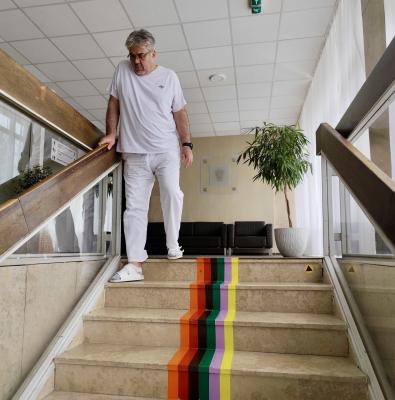
Fig. 3 Too close position to the handrail (source: own) [
](https://prohuman.sk/files/images/obr.3.popup_800.jpg)
Fig. 4 Correct choice of leading limb and distance from the handrail (source: own) [
](https://prohuman.sk/files/images/obr4.popup_800.jpg)
Fig. 5 Heel strike without controlled toe contact (source: own) [
](https://prohuman.sk/files/images/obr5.popup_800.jpg)
Fig. 6 Rotation in the knee joint (source: own) [
](https://prohuman.sk/files/images/obr6.popup_800.jpg)
Fig. 7 Insufficient use of the push-off limb during stair ascent (source: own) [
](https://prohuman.sk/files/images/obr7.popup_800.jpg)
Differentiation of patients by diagnosis
The biomechanics of stair walking must be assessed individually according to the patient's clinical condition:
-
Total knee arthroplasty (TKA) – extension deficit, weakening of m. quadriceps femoris, impaired eccentric control during stair descent.
-
Total hip arthroplasty (THA) – limited range of motion, risk of dislocation depending on the surgical approach, weakening of hip abductors.
-
Ankle joint immobilization (splint, orthosis) – impaired proprioception, limited shock-absorbing and stabilizing function of the foot.
-
Lower limb amputation – altered gait biomechanics, asymmetric load distribution, increased demands on the trunk stabilization system when walking with a prosthesis (Rychlíková, 2019).
The ability to walk on stairs is assessed mainly in terms of cardiovascular fitness, neuromuscular functions, and the patient's level of independence. It serves to determine rehabilitation potential and the risk of cardiovascular events. Patients are divided into the following functional categories:
Fully independent individuals:
-
Without limitations (cardiovascular health) – they manage walking up stairs without getting out of breath. The ability to climb at least 4 floors daily demonstrably reduces the risk of death from cardiovascular diseases and improves overall aerobic capacity.
-
Healthy, but with reduced fitness – they manage stairs, but with more significant shortness of breath or increased heart rate (the so-called anaerobic threshold), and require a gradual increase in load.
Patients with respiratory and cardiac limitations:
- Heart failure and chronic obstructive pulmonary disease (COPD) – walking ability is limited by shortness of breath and low exercise tolerance. For differentiation, the 6-minute walk test is used, for example. Stair climbing often serves as a targeted rehabilitation aid after consultation with a doctor.
Patients with neurological and movement deficits:
-
Movement and balance disorders – walking ability depends on lower limb strength, stability, and the ability to maintain rhythm. Standardized scales such as the POMA test (Performance-Oriented Mobility Assessment) or BBS (Berg Balance Scale) are used for their assessment.
-
Progression of disability in multiple sclerosis (MS) – for patients with an EDSS (Expanded Disability Status Scale) above 4.0, negotiating stairs is a critical milestone and often requires assistance or barrier-free access.
Immobile patients:
- Patients whose health condition does not allow walking up stairs even with support. Their musculoskeletal system requires passive transport, special stair climbers, or verticalization within physiotherapy.
Stair walking disorders are classified according to the primary cause, most often being neurological disorders (e.g., multiple sclerosis, Parkinson's disease) or degenerative joint diseases (arthrosis of the knees and hips). These difficulties limit locomotion, balance, and the correct step mechanism (Valkovič, Růžička, 2013).
Main types of pathological gait
In clinical practice, according to the International Classification of Diseases (ICD-10) (2026), gait disorders are classified as follows:
-
Ataxic gait (R26.0) : manifests as instability, staggering, and a widened base; the patient has difficulty maintaining balance when shifting weight.
-
Paralytic gait (R26.1) : arises from paralysis and muscle weakness, typically in neuromuscular diseases.
-
Difficulty in walking, not elsewhere classified (R26.2) .
-
Other and unspecified disorders of gait and mobility (R26.8) – a feeling of unsteadiness in the legs.
Among the most common causes of difficulty walking up stairs are gonarthrosis and coxarthrosis, which cause pain under load and reduce range of motion, as well as neurological and muscle diseases (e.g., muscular dystrophies, which directly impair the strength needed to overcome height differences). Other barriers to effective stair walking include sensory deficits (reduced visual acuity, blindness, absence of peripheral vision), vertigo, general weakness, uncertainty or a previous negative experience with stair walking, motor disorders from inactivity and significantly reduced physical fitness, fear, and others (Rajnohová, 2021).
Inability to walk up stairs can have several negative consequences, such as the risk of injury, as stairs represent a significant barrier for a person, limitation of daily functioning, social isolation, psychological consequences, faster loss of fitness and muscle strength, muscle atrophy, restricted movement, impaired function of the musculoskeletal system, inactivity, increased risk of cardiovascular diseases, and others.
Types of gait according to pathological cause are:
-
Unstable gait – when the lateral pelvic fixators are weakened, the unsupported side of the pelvis drops during the single support phase; muscles ensuring relative shortening of the swing limb are overloaded.
-
Gait with a shortened limb – the patient walks on tiptoe, does not fully extend the longer limb,
-
Unilaterally antalgic gait – the patient shortens the weight-bearing time of the painful limb, prolongs the push-off and stance phases,
-
Contracture in the ankle joint area – the gait rhythm and step length change, the patient shifts the center of gravity to the side – limping,
-
Flatfoot gait – energetically demanding gait, the medial aspect of the feet is loaded,
-
Extension contracture in the knee area – the patient performs slight abduction while simultaneously lifting the pelvis when passing through the vertical,
-
Contracture in the hip area – prevents the use of the rotational mechanism of the hip ball joint. The lumbar region, trunk muscles, and pelvis (pelvic reclination) participate in the movement,
-
Vestibular gait – gait with a wider base,
-
Parkinsonian gait – small, shuffling steps, the patient has difficulty changing gait rhythm, arm swing is reduced, flexed posture of the trunk and limbs is present,
-
Spastic hemiparetic gait – circumduction gait,
-
Tabetic (steppage gait) – the patient cannot estimate step height, lifts the lower limbs high, resembling a rooster's walk,
-
Paraparetic gait – the patient cannot use the alternation of flexion and extension in the step mechanism due to a flexed position; in the spastic form, it is the so-called scissor gait,
-
Cerebellar gait – in paleocerebellar disorder, staggering gait, titubation, wide base; also called drunken gait,
-
Fibular gait – the patient cannot perform dorsiflexion at the ankle, lands on the toe, and a steppage phenomenon (double tap) occurs (International Parkinson and..., 2025; Typológia chôdze podľa..., 2026; Valkovič, Růžička, 2013; Valkovič et al., 2012).
Clinical significance of correct stair walking
Stair walking is a functionally demanding activity requiring coordinated muscle work in a closed kinetic chain, optimal control of the center of gravity, and maintaining the axis of the lower limbs. Insufficient pelvic stabilization, rotation of the knee joint and trunk, as well as impaired eccentric control, lead to energetically inefficient and risky movement. Targeted education, an individually tailored movement strategy, and professional supervision allow for optimizing biomechanics, reducing compensatory mechanisms, and significantly decreasing the risk of falling (Kociová, 2013).
The variability and adaptability of stair walking in the parameter of stride time variability is a strong predictor of falls – higher variability means a higher risk of falling (Hausdorff, 2007). Other parameters, such as step width variability and step length variability, are also associated with fall risk. Older adults and individuals who have experienced a fall showed greater deviations in these parameters. These findings are important for stair walking, where stability is critical.
Variability in limb and trunk coordination is not an "error" – it is functional and adaptive; small deviations in movement are not a mistake but a natural mechanism of adaptation to conditions. Higher coordination and variability between the trunk and pelvis allows for flexible responses to changes and unexpected perturbations (e.g., uneven stairs, sudden stops). Conversely, too low or too high variability can reduce the ability to adapt and increase the risk of falling (Stergiou et al., 2006).
Evaluating gait variability and dynamics, including parameters such as step time, step length, and step width, can help identify seniors with a higher risk of falling. Rehabilitation programs can specifically train coordination and adaptability to improve safety when walking on stairs. When designing fall prevention strategies and aids (e.g., handrails, appropriate footwear), it is advisable to consider gait coordination and adaptability, not just stability during static walking (Ducharme, 2017).
Benefits of Stair Climbing Training
Stair climbing training brings several positives for the patient:
-
improvement of coordination, stability, and confidence when walking on stairs,
-
increased efficiency and enhancement of physical activity,
-
increased muscle activity and strength of the lower limbs,
-
better respiratory control during exertion,
-
reduction of fear of falling and other negative emotions,
-
greater independence in daily life,
-
elimination of social isolation,
-
positive impact on overall health and quality of life (Horbacz, Junger, 2025).
Gait training, even using digital tools, can lead to increased mobility and independence for patients. Many studies and campaigns focus on the positive aspects of sufficient walking or physical activity, but minimal attention is paid to proper walking technique.
Methodology of Gait Training
Gait training within physiotherapy using digital tools consists of several components:
-
initial functional assessment,
-
analysis of stair walking (video recording),
-
education on proper stair walking technique (using digital tools),
-
training with immediate feedback (using digital tools),
-
gradual increase in difficulty considering the patient's individuality,
-
repeated evaluation of patient progress.
The minimum frequency of gait training is at least twice a week, with a program duration of 4 – 6 weeks.
Use of Digital Tools in Gait Training
Modern technologies are revolutionizing gait training. These technologies include: 1. Motion Video Analysis – a modern method that, using camera recording and specialized software, breaks down movement into individual phases. In physiotherapy, it serves for detailed assessment of gait, posture, and joint range of motion. For gait training, camera systems placed on stairs (e.g., Dynamic Reha Stairs) can also be used for motion video analysis. The goals of motion video analysis are:
-
visualization of the gait movement pattern,
-
improvement of the physiotherapist's optical diagnostic skills,
-
identification of asymmetries and compensatory mechanisms,
-
providing immediate visual feedback to the patient,
-
objectification of findings,
-
documentation of findings and achieved progress,
-
increased awareness of one's own movement expression, including errors,
-
traceability of findings and results by the physiotherapist and patient,
-
evidence of therapeutic interventions (Video Analysis - a Vital..., 2026).
2. Mobile Applications – there are no special applications for training and monitoring stair walking, but fitness applications are usable that automatically record floors climbed (using a barometer) and steps taken. Usable mobile applications for smartphones include a classic pedometer, but also e.g., Pedometer: Daily Step Tracker, which automatically counts steps, burned calories, and active stair climbing, or the Google Fit and Apple Health applications, which accurately detect changes in altitude, record conquered floors, and allow setting daily goals. Another usable application is WalkStep: Tracker & Reward, which motivates movement through rewards and visualizes daily or weekly performance in detail. General goals of using mobile applications in stair walking training include:
-
tracking the number of steps and distance walked,
-
monitoring progress over time,
-
objectification of total load,
-
a motivational element supporting adherence to therapy (Merolli et al., 2021).
3. Balance and Pressure Sensors – provide timely and accurate quantification of biomechanical parameters, such as weight distribution, step length, and foot stability. They allow physiotherapists to detect even minor movement asymmetries during ascent or descent, thus accelerating the training of safe gait. Pressure or motion sensors can be used. Pressure (FSR) sensors and platforms are applied directly into shoes, on the feet, or are built directly into the stairs/floor. They evaluate pressure dynamics, determine push-off force, toe versus heel loading, and establish balance points. They enable monitoring of gait dynamics. Conversely, motion sensors (Inertial Measurement Units IMU / gyroscopes and accelerometers) are wearable devices most often attached to the trunk, pelvis, and lower limbs. They monitor spatial body angles, movement speed, and stability at the center of mass when negotiating stairs. These wearable sensors for gait analysis provide objective data comparable to clinical laboratories. These technologies are changing traditional rehabilitation because they replace the physiotherapist's mere visual estimation with hard data and allow the brain to learn proper coordination more effectively for a more demanding movement such as stair walking (Šmondrk et al., 2023).
Balance and pressure sensors have several benefits in stair walking training:
-
Real-time Biological Feedback (Biofeedback) – during stair walking, the system immediately alerts the patient (e.g., audibly or visually on a monitor) if they are transferring too much weight onto the healthy leg or if their center of gravity deviates, thus providing immediate instruction on how to correct their stance.
-
Correction of Axial Loading – sensors help prevent incorrect movement patterns, such as pelvic rotation or excessive loading of the knee and hip joints during ascent.
-
Safety and Fall Prevention – based on data, sensors evaluate the level of stability, helping therapists choose the right type of compensatory aid (e.g., crutches or walkers) and assess the patient's confidence in movement.
-
Monitoring in the Home Environment – besides rehabilitation centers, there are also motion and pressure sensors designed for installation on staircases, which, in addition to measuring activities, also serve for automatic lighting of the area, thereby significantly increasing safety during training.
The use of balance and pressure sensors in gait training has the following goals:
-
analysis of weight transfer between lower limbs,
-
assessment of postural stability and dynamic balance,
-
detection of asymmetric loading,
-
quantification and objectification of functional improvement (Bizovská et al., 2021).
4. Transfer of the biofeedback principle to motor training – biofeedback as a therapeutic method uses precise real-time measurements of bodily functions and operates on the principle of biological feedback. The patient is connected via sensors to a device that immediately converts unconscious bodily processes into visual or auditory signals (e.g., graphs on a screen). The use of biofeedback in physiotherapy for patients with respiratory or neurological problems helps increase self-confidence and certainty when overcoming stairs, also in everyday life. In stair climbing training, several types of biofeedback are applicable, namely:
-
Visual and acoustic biofeedback – uses pressure sensors in the soles of the feet or camera systems placed on the stairs. The patient sees a graphical representation of weight distribution on the step in real time on a monitor or hears an auditory signal upon achieving the correct foot position. Immediate visual/auditory information allows the patient to correct the position of the center of gravity, step length, and load intensity (more is stated in point 3 above).
-
Kinematic and electromyographic (EMG) biofeedback – sensors evaluate joint angles or the electrical activity of muscles (e.g., the quadriceps femoris muscle). If the patient correctly engages the musculature, the system provides positive feedback. This biofeedback prevents undesirable movement patterns (e.g., excessive compensation by the healthy limb).
-
Biofeedback spirometry – in stair climbing training, it represents a modern rehabilitation method that allows patients to control their breathing and oxygen consumption in real time through sight or hearing. This helps prevent shortness of breath, improves lung capacity, and reduces overall exertion during physical activity. This rehabilitation process consists of several steps:
-
Breathing monitoring – using a spirometric sensor, the device continuously measures vital lung capacity and tidal volume during ascent or descent of stairs.
-
Immediate response (Biofeedback) – the computer system converts breathing data into graphs or sounds, whereby the patient immediately sees whether they are breathing shallowly, too quickly, or whether they are engaging the diaphragm.
-
Technique correction – based on the feedback, the patient learns to consciously correct the frequency and depth of breaths in order to optimize oxygen supply to the muscles.
-
Prevention of fatigue and stress – thanks to correct breathing, the body achieves better mental and physical well-being, leading to less muscle fatigue and better management of exertion-related stress.
The goal of using biofeedback in gait training is:
-
acceleration of neuroplasticity – by repeating the movement with immediate correction, the central nervous system more quickly adopts the correct movement pattern,
-
reduction of fear or anxiety and the risk of falling – thanks to constant monitoring and support, the patient gains higher self-confidence, a sense of safety and certainty, which is crucial for independent functioning at home,
-
prevention of overload – the patient learns to properly dose their strength, thereby minimizing the risk of joint damage and muscle fatigue,
-
improvement of body oxygenation – correct breathing technique prevents a drop in blood oxygen saturation during walking,
-
constant feedback (e.g., a graph on the screen) – helps the patient better manage the stress of shortness of breath, thereby increasing their physical endurance and confidence,
-
synchronization of breathing with physical exertion, improvement of lung capacity, and reduction of disproportionate shortness of breath,
-
active patient participation – the patient becomes an active participant in therapy, not a passive recipient of the intervention,
-
better motor learning – feedback improves movement correction and supports the creation of a correct movement pattern,
-
increase in self-control – the patient gains the ability to self-regulate movement,
-
reduction of fear of falling – objective feedback increases the sense of safety and certainty during movement (Malik, Dua, 2025).
5. Use of specialized technologies – in stair climbing training, the physiotherapist can also utilize modern digital tools, such as robotic systems like the G-EO System (or similar robotically assisted trainers) simulating stair walking with controlled weight support and providing objective data on limb engagement in individual phases of the stair cycle. A trend of recent years is also the use of virtual reality (VR), where the combination of balance training with a virtual environment in gait training uses interactive environments to stimulate the brain, which significantly improves the recovery of motor functions. The patient perceives simulated obstacles, thanks to which their body naturally adapts, while the physiotherapist can precisely set the difficulty of the training.
The goals of using specialized technologies include:
-
improvement of brain neuroplasticity and involvement of the CNS – the visual perception in VR goggles forces the brain to build new neural connections more quickly; in robotic systems, the use of feedback and sensorimotor stimulation helps the brain relearn lost movement patterns,
-
high intensity and repeatability – allows completing hundreds to thousands of steps in a single therapy session,
-
greater motivation – thanks to fun games and scenarios, the patient focuses more on movement,
-
safety and early verticalization – training takes place in a stable environment where there is no risk of an actual fall, often combined with weight relief; safe training even for immobile patients thanks to sophisticated harnesses,
-
precise dosing of load – systems can precisely set the degree of body weight relief, belt speed, and resistance placed on the limbs according to the patient's current condition,
-
support of the correct pattern – they prevent the formation of incorrect movement habits and correct gait asymmetry (Banyai, Brișan, 2024; Využití virtuální reality..., 2026).
The use of digital tools in gait training can be limited by several barriers, which can be generally divided into somatic, psychological, and socio-economic categories. Somatic barriers include hand or body tremors or sensory disorders – visual and hearing impairments (Prashad, Chen, 2018). Other physical obstacles may include the presence of a chronic disease or polymorbidity with bothersome symptoms that hinder the use of ICT (e.g., immobility, pain, pressure ulcers, nausea, vomiting, and others). The use of modern technologies can also be determined by nutritional disorders (malnutrition, dehydration), thermoregulation disorders, sleep disorders, the presence of dizziness, instability and falls, elimination disorders, and other factors arising from the somatic aspect. Psychological barriers in relation to digital tools in patients include dementia, depression, delirium, memory disorders, maladaptive disorders, decreased mental performance, fatigue, slowing of mental processes, impaired attention, changes in emotional reactions, personality changes, and others. Socio-economic determinants include patient loneliness, a lower degree of social contacts, social isolation and lack of interest in social inclusion, inactivity, insufficient financial security, unsuitable housing conditions, and others (Magerčiaková, Zrubáková, 2024).
Conclusion
Stair climbing is among the most demanding common daily activities, especially for seniors, patients after surgical procedures and injuries. It requires sufficient muscle strength of the lower limbs, trunk stability, balance, coordination, as well as adequate respiratory and cardiovascular reserve. Practical experience of physiotherapists indicates that patients can manage walking on level ground, but stairs are precisely the limiting factor for their return to independence. Digital tools are not a replacement for physiotherapy, but represent a way to help the patient better understand their own movement during stair climbing. The implementation of these tools in healthcare practice increases the quality of the rehabilitation process for patients, but also contributes to the safety of physical activity, prevention of social isolation, and improved quality of life, also in the context of independence or self-sufficiency in relation to basic daily activities (e.g., grocery shopping, attending medical examinations, visiting religious services, using various services, traveling, and the like). Digital tools, as a significant modern supplement to classical physiotherapy, also contribute to improving the understanding of movement, patient motivation, and the objectivity of therapy.
Author:
Mgr. Pavel Mogora
List of Bibliographic References
AMERICAN PSYCHOLOGICAL ASSOCIATION. 2018. Motor learning. In: APA Dictionary of Psychology [online]. Available at: https://dictionary.apa.org/motor-learning
BANYAI, A. D., BRIȘAN, C. 2024. Robotics in Physical Rehabilitation: Systematic Review. Healthcare (Basel). 2024 Aug 29;12(17):1720. doi: 10.3390/healthcare12171720. PMID: 39273744; PMCID: PMC11395122.
BIZOVSKÁ, L., NOHELOVÁ, D., JANURA, M. 2021. Inerciálne senzory a ich využitie v klinickej praxi. In: Rehabilitace a fyzikální lékařství, 28, 2021, No. 4, pp. 177-184. doi: https://doi.org/10.48095/ccrhfl2021177.
DOE, J., SMITH, J. 2022. Effectiveness of Spirometer Feedback in Respiratory Physiotherapy for Seniors. Journal of Respiratory Therapy. 2022. ISSN 1234-5678.
DUCHARME, S. W. 2017. Quantifying gait adaptability: Fractality, complexity, and stability during asymmetric walking. Doctoral dissertation. Amherst: University of Massachusetts, 2017.
HAUSDORFF, J. M. 2007. Gait dynamics, fractals and falls: finding meaning in the stride-to-stride fluctuations of human walking. Hum Mov Sci. 2007 Aug;26(4):555-89. doi: 10.1016/j.humov.2007.05.003. Epub 2007 Jul 5. PMID: 17618701; PMCID: PMC2267927.
HORBACZ, A., JUNGER, J. 2025. Pohybové programy pre seniorov. Košice: Univerzita Pavla Jozefa Šafárika v Košiciach, Ústav telesnej výchovy a športu, 2025, 117 s. ISBN 978-80-574-0486-6.
CHAKRABORTY, A., WHITE, J. et al. 2024. Remote monitoring of daily spirometry and oximetry in patients with pulmonary fibrosis: A feasibility study. BMJ Open Respiratory Research. 2024, vol. 11, e001848. ISSN 2052-4439.
INTERNATIONAL PARKINSON AND MOVEMENT DISORDER SOCIETY. 2025. Gait disorders and stiffness in Parkinson's disease. [online]. [cit. 2026-05-20]. Available on the internet: https://sk.movementdisorders.org/MDS/Resources/Patient-Education/Gait-Disturbances-and-Freezing-in-Parkinsons-Disease.htm
KOCIOVÁ, K. 2013. Základy fyzioterapie. Martin: Osveta, 2013, 276 s. ISBN 978-80-8063-389-9.
MAGERČIAKOVÁ, M., ZRUBÁKOVÁ, K. 2024. Význam digitálnej zdravotnej gramotnosti u seniorov z perspektívy ošetrovateľstva. In: Prohuman [electronic source] : vedecko-odborný internetový časopis. Vol. 16 (2024), online, pp. 1 - 12. ISSN 1338-1415.
Medzinárodná klasifikácia chorôb – MKCH-10. 2026. [online]. [cit. 2026-03-03]. Available on the internet: https://www.nczisk.sk/standardy-v-zdravotnictve/pages/medzinarodna-klasifikacia-chorob-mkch-10.aspx
MALIK, K., DUA, A. 2025. Advancing Patient Care With Biofeedback. [online]. [cit. 2026-04-10]. In: StatPearls Treasure Island (FL): StatPearls Publishing. Available on the internet: https://www.ncbi.nlm.nih.gov/books/NBK553075/
MEROLLI, M,, FRANCIS, J.J,, VALLANCE, P., BENNELL, K. L., MALLIARAS, P., HINMAN, RS. 2021. Patient-Facing Mobile Apps to Support Physiotherapy Care: Protocol for a Systematic Review of Apps Within App Stores. JMIR Res Protoc. 2021 Dec 9;10(12):e29047. doi: 10.2196/29047. PMID: 34889767; PMCID: PMC8704116.
PRASHAD, R., CHEN, M. 2018. Back to the Basics: The Importance of Considering Health Literacy in the Development and Utilization of Consumer E – Health Interventions. In: PAPALOIS, V. E., THEODOSOPOULOU, M.: Optimizing Health Literacy for Improved Clinical Practices. Hershey PA: IGI Global, 2018, p. 73 – 86. ISBN 978-1-5225-4074-8.
RAJNOHOVÁ, E. 2021. Imobilita u geriatrických pacientov. [online]. [cit. 2026-04-10]. In: MINISTERSTVO ZDRAVOTNÍCTVA SR: Štandardné postupy, 2021, 19 s. Available on the internet: file:///C:/Users/pouzivatel/Downloads/3_1-Imobilita-u-geriatrickeho-pacienta-Geriatria%20(1) .pdf
RYCHLÍKOVÁ, E. 2019. Funkční poruchy kloubů končetin. Praha: Grada, 2019, 240 s., ISBN 9788027120963.
SMITH, K., LEVIN, S. 1995. Walkfit: chůzí ke zdraví. Bratislava: Timy, 1995, 166 s. ISBN 80-88799-03-1.
STERGIOU, N., HARBOURNE, R., CAVANAUGH, J. 2006. Optimal movement variability: a new theoretical perspective for neurologic physical therapy. J Neurol Phys Ther. 2006 Sep;30(3):120-9. doi: 10.1097/01.npt.0000281949.48193.d9. PMID: 17029655.
ŠMONDRK, M., BABUŠIAK, B., KREANOVÁ, A. 2023. Využitie FSR senzorov pre monitorovanie dynamiky chôdze. [online]. [cit. 2026-04-10]. In: Konferencia: Trendy v biomedicínskom inžinierstve, 2023, pp. 186 – 191. DOI: 10.13164/trendybmi.2023.186. Available on the internet: https://www.researchgate.net/publication/374957955_Vyuzitie_FSR_senzorov_pre_monitorovanie_dynamiky_chodze>.
TROJAN, S. 2001. Fyziologie a léčebná rehabilitace motoriky človeka. 2. přeprac. a rozš. vyd. Praha: Grada, 2001, 226 s., ISBN 9788024700311.
VALKOVIČ, P., RŮŽIČKA, E. 2013. Classification of gait disorders. In: Neurology for Practice, 14, 2013, No. 4, pp. 176–178. ISSN 1339-4223. Types of gait according to pathological cause. 2026. [online]. [cited 2026-03-03]. Available on the internet: https://fyzioterapia.net/2012/02/typy-chodze-podla-patologickej-priciny/
VALKOVIČ, P., KOŠUTZKÁ, Z., SCHMIDT, F. 2012. Postural instability, gait disorders and falls in Parkinson's disease. In: Czech and Slovak Neurology and Neurosurgery, 2012; 75/108(2): 141–153. ISSN 1802-4041.
Video Analysis - a Vital Part of the Physiotherapy Process. 2026. [online]. [cited 2026-06-10]. Available on the internet: https://www.dartfish.com/blog/video-analysis-physiotherapy-process/
Use of virtual reality in physiotherapy. 2026. [online]. [cited 2026-04-10]. Available on the internet: https://fyzioklinika.cz/poradna/clanky-o-zdravi/20-vyuziti-virtualni-reality-ve-fyzioterapii.


